
Abrasive Paper Selection Guide
A Core Material in Industrial Surface Finishing
Abrasive paper is more than a consumable: it affects processing efficiency and surface quality from the first sanding stage.
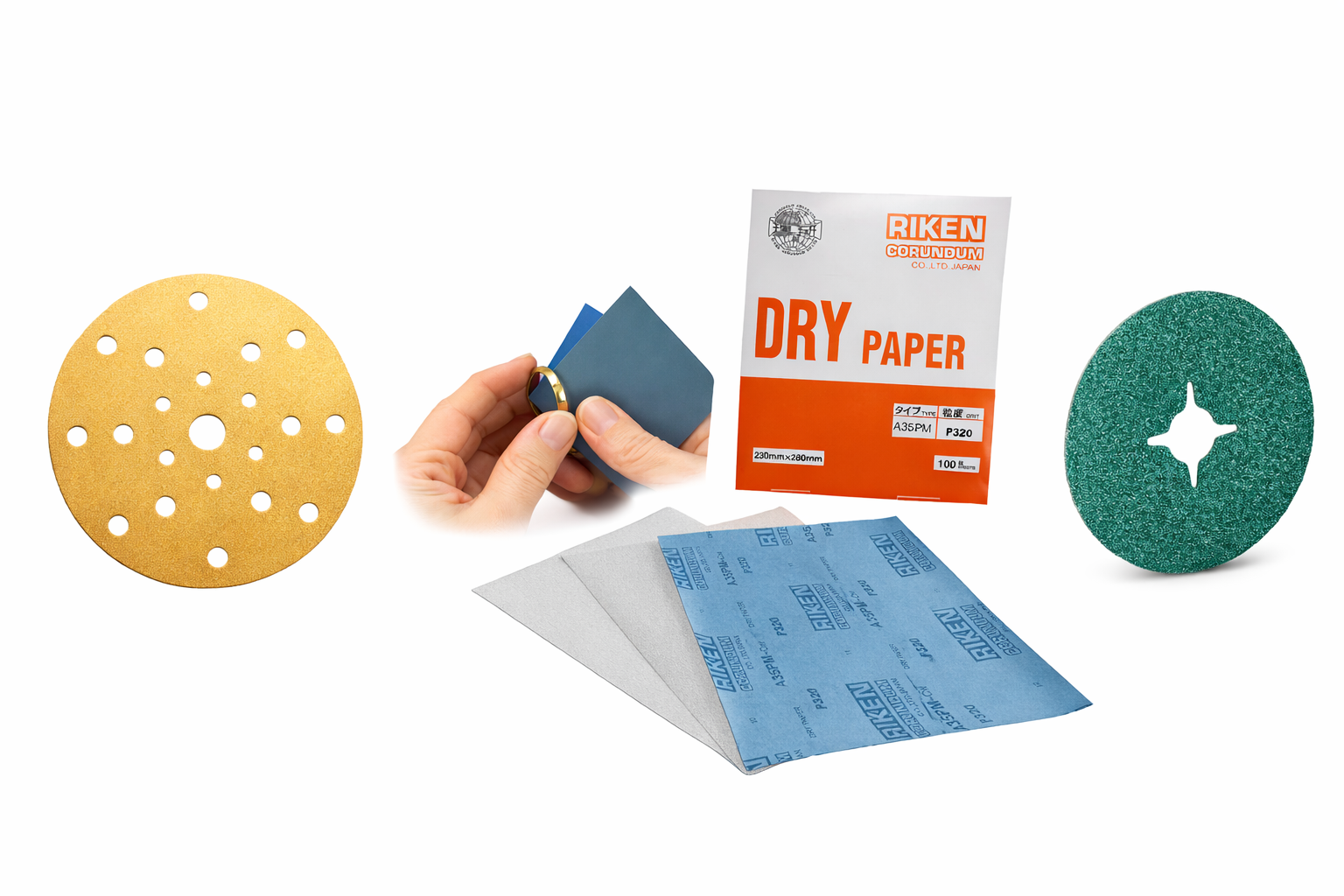
Abrasive Selection Matters Alongside Equipment and Process Settings
Abrasive paper is a fundamental material in grinding and surface treatment. Depending on the particular product, abrasive processes support metalworking, automotive components, PCB and semiconductor-related work, precision medical parts, watches and jewellery, woodworking and fine finishing. Suitability for any demanding process requires model-specific verification.
Its role extends beyond flattening a surface. It affects stock-removal rate, process stability and finish consistency, with consequences for coating, plating, bonding and polishing. Poor selection can cause weak cutting, longer processing time, overheating and uneven scratches, increasing rework and unit cost.
When improving a process, assess grain type, grit sequence and backing alongside machine capability and operating parameters. Treat the abrasive as an engineering component of the process, and compare efficiency, quality consistency and total production cost.
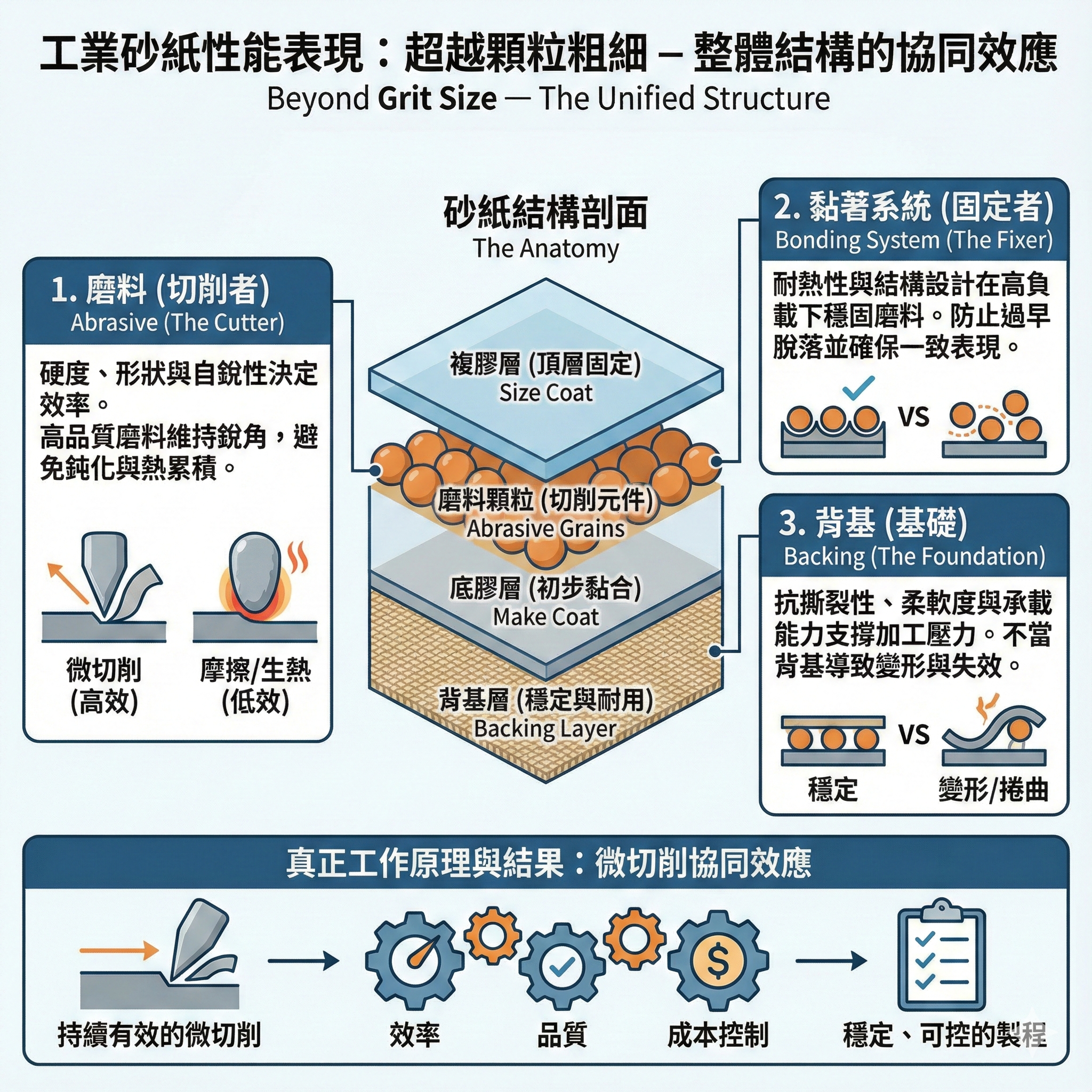
Abrasive Paper Structure and Working Principles
Performance depends on the complete abrasive construction, not grit alone. Products with the same grit can differ in cutting action, life and stability.
Abrasive Grain
Grain hardness, toughness, shape and self-sharpening behaviour affect removal rate and service life. Effective cutting edges help limit rubbing, unnecessary heat and inconsistent surface quality.
Backing Material
The backing provides strength, flexibility and durability, supporting the applied load and contact with the workpiece. Paper grades differ in strength and flexibility. An unsuitable backing may deform or tear even when the abrasive grain is suitable.
Bonding System
The bond holds grain on the backing. Heat resistance and structural stability influence grain retention and performance during extended sanding. Assess the complete construction for the working conditions.
Choosing Paper-Backed and Cloth-Backed Belts
Belts may use paper or cloth backing. The name “abrasive paper” or “abrasive cloth” alone does not establish whether a grade can be converted into an endless belt. RIKEN AP57, for example, is offered in belt, roll and sheet formats.
Compare model, backing strength, width, circumference, joint and machine requirements. Paper-backed and cloth-backed belts are not automatically interchangeable.
Where Abrasive Paper Can Be Used
Depending on the model, paper-backed abrasives may be supplied as sheets, discs, rolls or belts for hand use or compatible equipment. Check the manufacturer specification for dry/wet use, self-adhesive or hook-and-loop attachment and product format.
Handheld Sanding Equipment
Confirm the product dimensions, attachment, backing and compatible machine. Select the abrasive for the workpiece and required finish.
Hand Sanding
Choose backing flexibility and grit to suit the contour, pressure and target surface. Evaluate control and scratch consistency during trials.
High-Removal Applications
Ceramic grain can support demanding removal processes under suitable operating conditions. Confirm that the product backing, equipment and applied load are appropriate.
Before machine sanding, confirm the abrasive model, dimensions, attachment and dry/wet conditions. Paper-backed belts require compatible equipment and joint specifications. Select cloth-backed products separately according to load, workpiece shape and operating conditions.
Understanding Abrasive Grain Types
The abrasive grain cuts the workpiece. Its properties affect efficiency, service life and finish. Different grain types may behave differently even at the same grit, so grain selection is an important part of process planning.
Aluminium Oxide
A tough, widely used abrasive for metalworking, woodworking and general surface preparation. Cutting behaviour and service life depend on the particular product and process.
Silicon Carbide
Sharp grain used in fine finishing and suitable brittle-material applications. Precision PCB, semiconductor or medical uses require specific product and process qualification.
Ceramic Grain
Self-sharpening grain for suitable high-removal and high-load processes, including compatible automated operations. Match the grade and operating load to the application.
How to Choose a Grit Sequence
Common Grit Designations: A Brief Comparison
| Standard | Example notation | Common regions | Selection note | Typical applications |
|---|---|---|---|---|
| CAMI (US) | #80、#120 | United States and parts of Asia | Check the applicable CAMI grading specification | General industrial and hand sanding |
| FEPA (European) | P80、P120 | Europe and international markets | Check the applicable FEPA P-grade specification | Industrial abrasive paper and belts |
| JIS (Japanese) | #240、#800 | Japan | Check the applicable JIS grading specification | Fine finishing and polishing |
Grit designations indicate abrasive particle size. Lower numbers generally indicate coarser grain within the same standard; higher numbers indicate finer grain. Different grading standards are not directly interchangeable by number. Fine grit alone cannot efficiently remove every deep scratch; select a sequence for the material and finish.
A grit sequence should reflect each stage of the process. Coarser grit removes stock, intermediate grit refines the surface and removes earlier scratches, and finer grit controls the final texture and roughness. Skipping too far between grits can increase processing time and reduce surface consistency.
Plan grit selection as a process sequence rather than an isolated choice. Validate the sequence against the required quality, processing time and cost under actual working conditions.
Application Selection Reference
| Application sector | Typical workpiece materials | Abrasives to assess | Indicative grit range | Backing options | Selection considerations |
|---|---|---|---|---|---|
| Metalworking / heavy industry | Carbon steel, stainless steel, alloy steel | Aluminium oxide, ceramic grain | #36–#120 | Cloth, fibre | Cutting performance, durability and suitable load capacity |
| Automotive components | Steel, aluminium, cast components | Aluminium oxide, ceramic grain | #80–#320 | Cloth | Surface consistency between processing stages |
| Automotive repair / detailing | Paint, filler, plastic components | Aluminium oxide, silicon carbide | #180–#2000 | Paper, film | Control removal and avoid excessive sanding or scratches |
| PCB / semiconductor-related processes | Resin, copper foil, substrates | Silicon carbide, fine aluminium oxide | #400–#1500+ | Film | Process stability, tolerance and surface control |
| Precision medical components | Stainless steel, titanium alloys, precision parts | Silicon carbide, fine aluminium oxide | #600–#2000 | Film, paper | Surface consistency and control of fine scratches |
| Watches, jewellery and diamond-related work | Precious metals, hard materials | Silicon carbide, fine aluminium oxide | #800–#3000 | Film, paper | Consistent particle size and visual finish |
| Woodworking and fine furniture | Solid wood, engineered boards | Aluminium oxide | #80–#400 | Paper, flexible cloth | Conformability and control of surface flatness |
| Surface polishing / fine finishing | Metal, plastic | Silicon carbide, fine aluminium oxide | #600–#3000 | Film, paper | Fine scratch pattern and repeatable finish |
The ranges above are preliminary selection references, not a processing recipe or proof of product qualification. Confirm the exact model, grading standard, backing, equipment, workpiece and process requirements, particularly for medical, PCB/semiconductor and hard-material applications, and validate through trials.
How Selection Priorities Differ by Application
Metalworking and Heavy Industry
High-load, high-removal processes need a construction that withstands the working conditions. Insufficient grain toughness can lead to dulling, rapid wear or grinding burns. Aluminium oxide or ceramic grain with a suitable cloth or fibre backing may be considered, progressing from stock removal to surface refinement.
Automotive Components and Coating Preparation
Balance efficiency and surface consistency because sanding affects coating, plating and assembly. Use staged grit sequences rather than asking one abrasive to perform every operation. Consider aluminium oxide and, where appropriate, ceramic grain for higher removal requirements.
PCB and Semiconductor-Related Processes
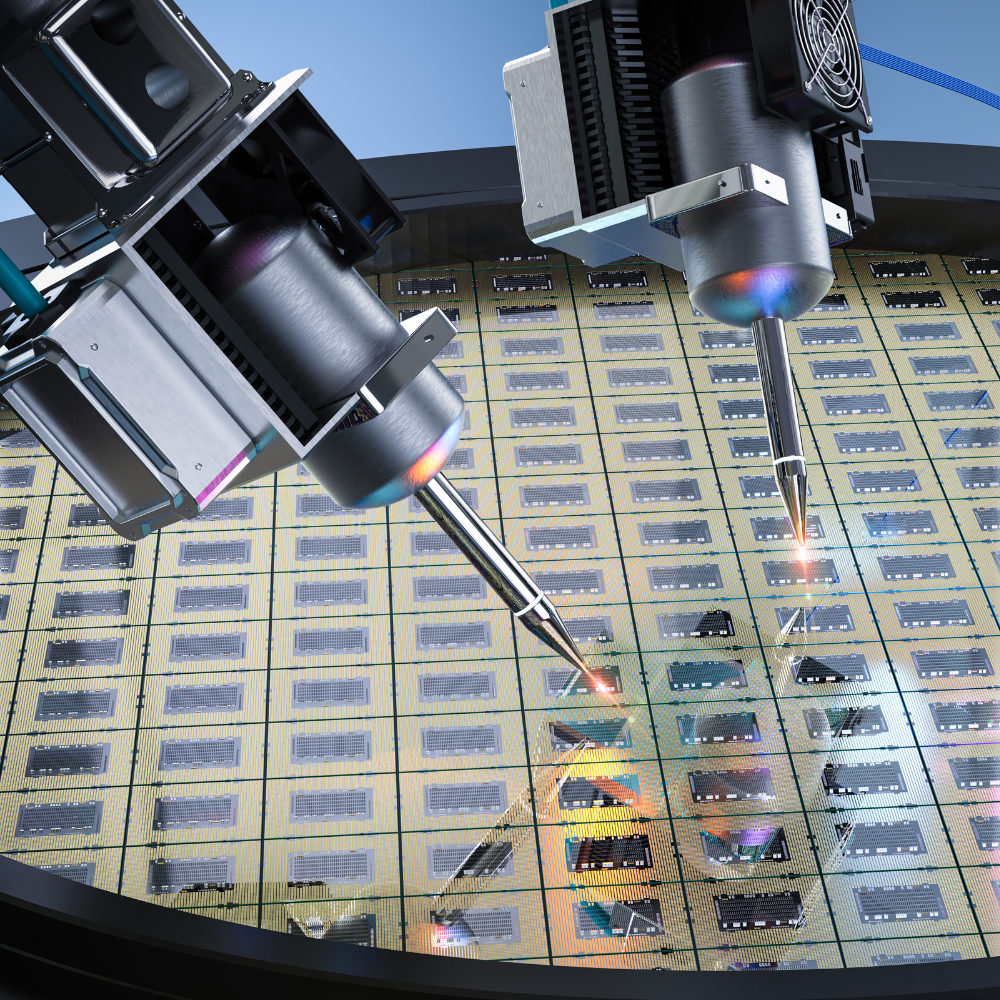
These applications may prioritise controlled, repeatable surface treatment over fast removal. Fine silicon carbide or consistent aluminium oxide with film backing may be considered only after confirming the exact product and process requirements. Avoid assuming that a generic abrasive is qualified for a precision process.
Woodworking
For wood and engineered boards, control and conformity are important. An excessively aggressive abrasive or stiff backing may remove too much material or produce uneven surfaces. Aluminium oxide with paper or flexible cloth backing can be assessed, with grit progression chosen for the required finish.
Polishing and Fine Finishing
The aim is to refine roughness and visual quality with controlled removal. Fine silicon carbide or aluminium oxide on suitable film or paper backing can be assessed for a consistent scratch pattern and repeatable finish.
Our Abrasive Brands

RIKEN Abrasive Paper
Product Selection
RIKEN offers paper-backed grades with different flexibility and applications. Confirm the exact model, workpiece, grit and finish requirement; a general brand description does not establish suitability for jewellery or diamond processing.
VSM Abrasives
Product Selection
VSM offers a range of abrasive grains and backings. Geometrically shaped ceramic grain products for heavy metal removal are distinct from paper-backed finishing products. Confirm the complete product model and backing for the operation.
STARCKE Abrasive Paper
Product Selection
STARCKE offers silicon carbide and aluminium oxide products, including waterproof paper grades for suitable applications. Confirm the model, coating system, equipment and required finish for automotive repair, paint preparation or precision hand sanding.
Frequently Asked Questions
Their backings differ, but belts are not limited to cloth backing. Paper grades such as RIKEN AP57 may also be supplied as belts. Compare backing, abrasive, dimensions, joint, equipment and wet/dry conditions. Provide the current model and machine details; appearance or grit alone is insufficient.
Grit is only one factor. Assess abrasive type, backing, sequence, pressure and workpiece material. A finer grit may not efficiently remove deep scratches from the preceding stage. Confirm the current surface and target, then plan a trial.
Abrasive type, coating density, bonding system and backing can differ and affect cutting, service life and finish. Check the grading standard and compare products under the same processing conditions.
Distinguish filler levelling, primer preparation, local paint-defect removal and preparation for polishing. Choose model and grit for the coating, equipment and wet/dry process. Fine finishing grit should not be substituted directly for stock-removal grit.
Depending on the grade, abrasive paper can be used for wood, coatings and some metal surface treatments. Paper-backed products include machine discs and belts, so machine sanding is not universally excluded. Follow manufacturer guidance on workpiece, format and equipment; assess cloth or other abrasives where the paper grade is unsuitable.