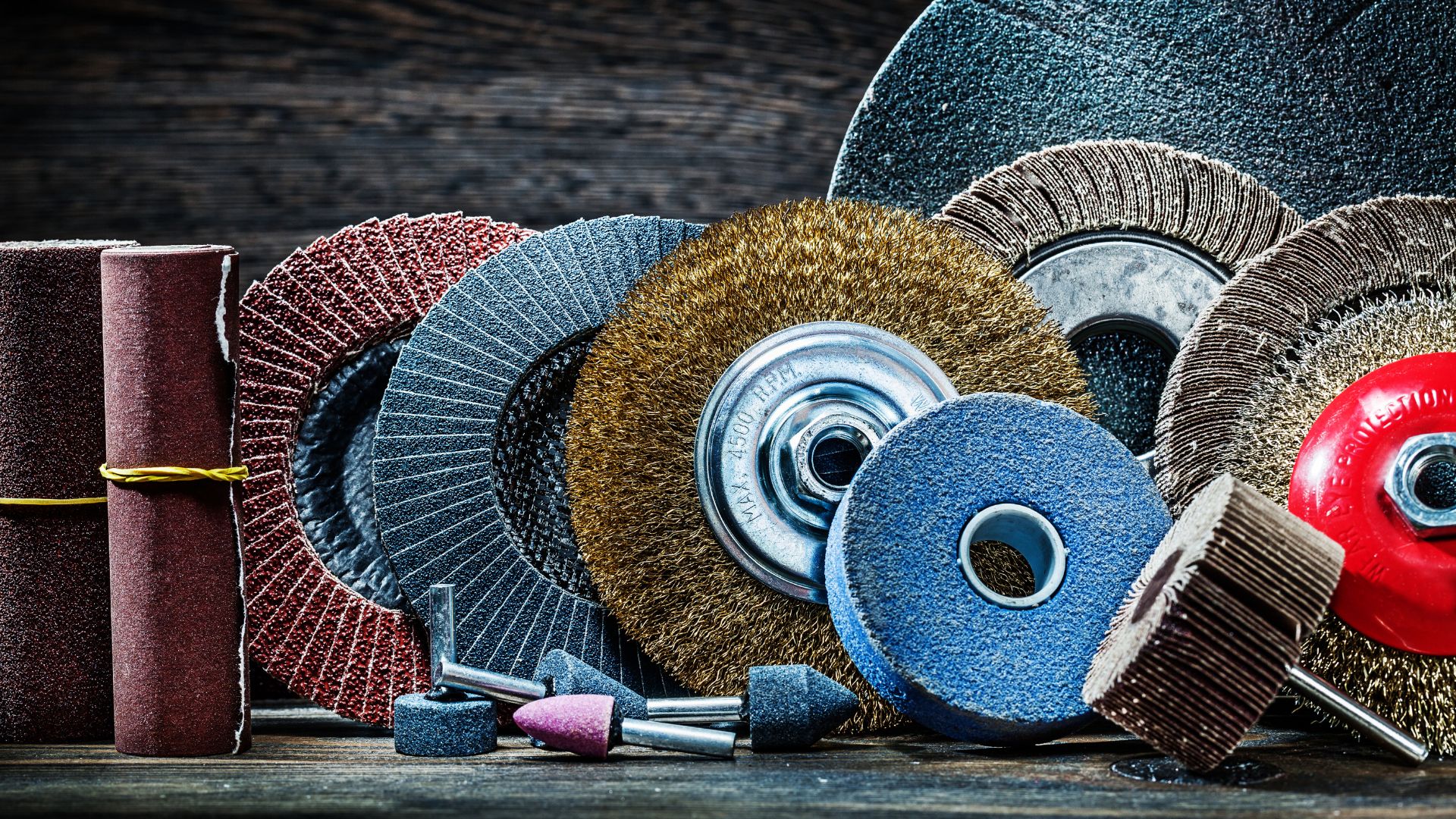

What is resin bond? It is one of the bonding agents for bonded abrasives. Resin bond is the material used to bond abrasives and binders together during processing. Its main function is to stably fix the abrasive on the grinding wheel or sandpaper during the grinding process, so as to ensure the effect and quality of grinding. Resin-bonded aggregates are sometimes referred to as dispersion coatings, broadcasts, or coating systems.
Types of Resin Bonds
Resin binders are divided into two types: organic resin binders and inorganic resin binders. Organic resin binders are mainly composed of polymer materials such as Polyurethane and polyurethane, while inorganic resin binders include inorganic materials such as silicates and phosphates.
Characteristic
Resin and hardener are the two main components of resin bonds. A reactive resin material is made by mixing these ingredients. Depending on the type of resin used, i.e. liquid or powder, wet or dry mixing is used. Abrasive grains, fillers, resin components and additives such as silica and its derivatives are homogeneously mixed together prior to the molding process. Fillers are added to the mixture for various reasons, such as creating pores, enhancing bonding properties or acting as solid lubricants during grinding processes.
Types of Resin Bonds
Organic resin binder
Organic resin binders are mainly composed of polymer materials such as polyether ketone and polyurethane. Polyurethane resin binder is composed of polymer and crosslinking agent, which can form a three-dimensional network structure at high temperature. Polyurethane resin binders are composed of polyurethane polymers, crosslinking agents and additives. Due to the good flexibility, wear resistance and high temperature resistance of organic resin binders, it is more and more widely used in high-speed grinding and high-temperature environments.
Inorganic resin binder
Includes inorganic materials such as silicates and phosphates. The silicate resin binder is mainly composed of silicate and alumina, which can be sintered at high temperature to become a ceramic-like material. Silicate has excellent heat resistance and corrosion resistance, so it is widely used in high temperature environments, such as furnaces, jet engines, etc. In addition, silicate resin binders can also be used as the basis for refractory and thermal insulation materials. Phosphate resin binder is mainly composed of phosphate and alumina, which has higher fire resistance and corrosion resistance than silicate resin binder. Phosphate resin binders are often used in the production of refractory bricks, refractory cement and heat insulation materials.
Inorganic resin binders have the advantages of high temperature resistance and corrosion resistance, and are widely used in high temperature environments. Compared with organic resin binders, inorganic resin binders are not easy to burn, so they have better fire resistance. The application fields of inorganic resin binders are very extensive, covering many fields such as building materials, electronic materials, and magnetic materials. For example, inorganic resin binders can be used in the production of electronic components, magnetic materials and glass fiber reinforced materials, etc. In addition, inorganic resin binders can also be mixed with organic resin binders to improve the performance of materials.
The main components of resin bonded grinding
Abrasive grains
Abrasive grains, sometimes called grit, are particles of a man-made compound. The chemical structure of the particles determines the physical properties such as the shape and sharpness of each particle and its hardness and friability (proneness to break down). Common particle types used in the manufacture of bonded grinding tools include:
| Aluminum oxide | Tough, lumpy pellets for cutting metals and other high tensile strength materials without excessive cracking. |
| Silicon carbide | Very hard and sharp abrasive for non-metallic materials such as concrete. |
| Zirconium | A very fine, dense grain for rough cutting |
| Ceramics | Unique ceramic alumina that is two to three times tougher than standard alumina |
Adhesive
The binder that holds the particles together determines the wheel’s resistance.
Strengthen
The reinforcement provides the strength to operate the abrasive product at the marked maximum RPM and to withstand the side pressure applied during use. This key element, invisible to the naked eye, determines the structural strength of the product.
Composition
During the manufacturing process, these three components are combined to form the grinding wheel. Granules and binders are measured, combined and then pressed in automatic hydraulic presses. The item is then cured.
Application

Resin bonds are widely used in grinding wheel manufacturing, and different types of bonds have different application scenarios. In the grinding wheel production process, the concentration will affect the hardness and grinding performance of the grinding wheel. If the concentration is too high, the grinding wheel will become too hard, and the grinding efficiency will decrease, while if the concentration is too low, the grinding wheel will become too soft, easy to deform and break. Therefore, it is necessary to select an appropriate binder concentration according to the required hardness and grinding effect when manufacturing the grinding wheel.
| bond | Grinding wheel | features | application |
| resin bond | Diamond Resin Grinding Wheel | Low Yang coefficient, good surface roughness, good cutting force | Cemented carbide, metal ceramics, precision ceramic grinding, glass precision grinding |
| CBN resin grinding wheel | High speed steel, alloy tool steel, etc. | ||
| metal bond | Diamond Metal Grinding Wheel | Good wear resistance, strong abrasive retention | Grinding of pure hard steel such as glass and ceramics |
| CBN metal grinding wheel | Wet grinding of high-speed materials | ||
| electroplating | Diamond Plated Grinding Wheel | Strong abrasive holding power and large amount of abrasive protrusion | Cemented carbide, ceramic coarse grinding, rubber |
| CBN electroplated grinding wheel | Forming grinding, inner circle grinding, gear grinding of steel bodies |
Conclusion
Resin binder is an important chemical agent that plays an indispensable role in many industrial fields. The resin binder can effectively improve the performance of the resin, enhance the strength, hardness, wear resistance and corrosion resistance of the material, and at the same time improve the high temperature resistance and low temperature resistance of the material.
In addition, the resin binder can also increase the adhesion and bond strength of the material, and improve the overall quality and life of the product. According to different application scenarios, the types and formulations of resin bonds are also different. Therefore, when selecting and applying resin bonds, it is necessary to carefully consider the properties and requirements of materials, as well as the characteristics and effects of resin bonds, and make appropriate selection and Matching.
References
- https://www.sciencedirect.com/topics/engineering/resin-bond
- https://resinbondedaggregates.com/knowledge-centre/what-is-resin-bonding
- https://baike.baidu.hk/item/%E6%A8%B9%E8%84%82%E7%B5%90%E5%90%88%E5%8A%91/10993985
- http:// https://www.jendow.com.tw/wiki/%E7%B5%90%E5%90%88%E5%8A%91
- https://seya.com.tw/knowledge_detail.php?id=253
- https://www.unitedabrasives.com/resources/product-safety-literature/product-technical-information/bonded-abrasives/